Lumbrokinase vs Nattokinase: Which Is Better?
Lumbrokinase vs nattokinase: compare source, fibrinolytic activity, research, safety, and daily use to choose the enzyme that best fits your circulation goals.

On this page:
- What Is Nattokinase and What Does Nattokinase Do?
- What Is Lumbrokinase?
- Lumbrokinase vs Nattokinase: Key Differences
- How They Work in the Body
- Benefits of Nattokinase vs Lumbrokinase
- Which Is Better: Nattokinase vs Lumbrokinase?
- Can You Take Nattokinase and Lumbrokinase Together?
- Why Nattokinase Is the Preferred Daily Solution
- Final Verdict
- Frequently Asked Questions
Author: Maria Morgan-Bathke, PhD, RD
Published on: May 1, 2026
Lumbrokinase and nattokinase both support fibrin breakdown, with key differences in source, activity labeling, research setting, and typical use. Nattokinase comes from fermented soy; lumbrokinase is an earthworm-derived enzyme complex with direct fibrinolytic activity.
Enzyme-based therapies have gained increasing attention for their ability to support cardiovascular health through natural mechanisms.
Among these, fibrinolytic enzymes stand out for their role in breaking down fibrin, a protein involved in blood clot formation and arterial plaque structure. Two of the most widely discussed options are lumbrokinase and nattokinase, both known for their effects on circulation and vascular function.
Understanding the differences between these two enzymes is essential for selecting the most appropriate option. Both may support healthy blood flow and normal fibrin breakdown. Their origins, mechanisms, and typical use cases differ significantly.
This distinction becomes especially important when considering long-term cardiovascular maintenance versus targeted intervention.
What Is Nattokinase and What Does Nattokinase Do?
Nattokinase is a proteolytic enzyme extracted from natto, a traditional Japanese food made by fermenting soybeans with Bacillus subtilis. It has been consumed for centuries and is associated with the cardiovascular health often observed in populations that regularly include natto in their diet.
The primary function of nattokinase is to break down fibrin, a protein that plays a central role in blood clot formation and contributes to the structural integrity of arterial plaque. By supporting the body’s natural fibrinolytic processes, nattokinase may help maintain smoother blood flow and normal fibrin breakdown. This mechanism makes it particularly relevant to long-term vascular health.
In addition to fibrin degradation, nattokinase has been shown to support several important physiological processes:
- Support for plasmin activity, the body’s natural clot-dissolving enzyme
- Improvement in blood viscosity and circulation
- Support for healthy blood pressure through vascular relaxation
- Contribution to arterial flexibility and reduced stiffness
Over time, these effects may contribute to improved cardiovascular resilience. Nattokinase works gradually, making it well suited for consistent, daily use.
High-potency formulations such as Healthletic's Nattokinase, which delivers a clinical-strength 10,800 FU dose, are designed to go beyond basic maintenance and actively support arterial health at a deeper level.
What Is Lumbrokinase?
Lumbrokinase is a group of enzymes derived from earthworms, specifically Lumbricus rubellus. It has been used in traditional medicine systems and is increasingly studied for its fibrinolytic properties, including in 2025 meta-analysis of lumbrokinase stroke studies.
The primary mechanism of lumbrokinase involves direct degradation of fibrin. While nattokinase enhances the body's natural processes, lumbrokinase acts more directly on fibrin structures, breaking them down with higher intensity.
This makes it particularly relevant in situations where rapid or targeted fibrin reduction is desired.
Lumbrokinase is often associated with more specialized use cases, including:
- Direct fibrin-degrading activity
- Research in medically supervised cardiovascular and stroke-related settings
- Practitioner-guided use when a lumbrokinase formulation is being considered
Lumbrokinase is less commonly used as an everyday wellness supplement than nattokinase. Product activity units and formulations can also differ, so dose-to-dose comparisons should use the specific product label and activity measure.
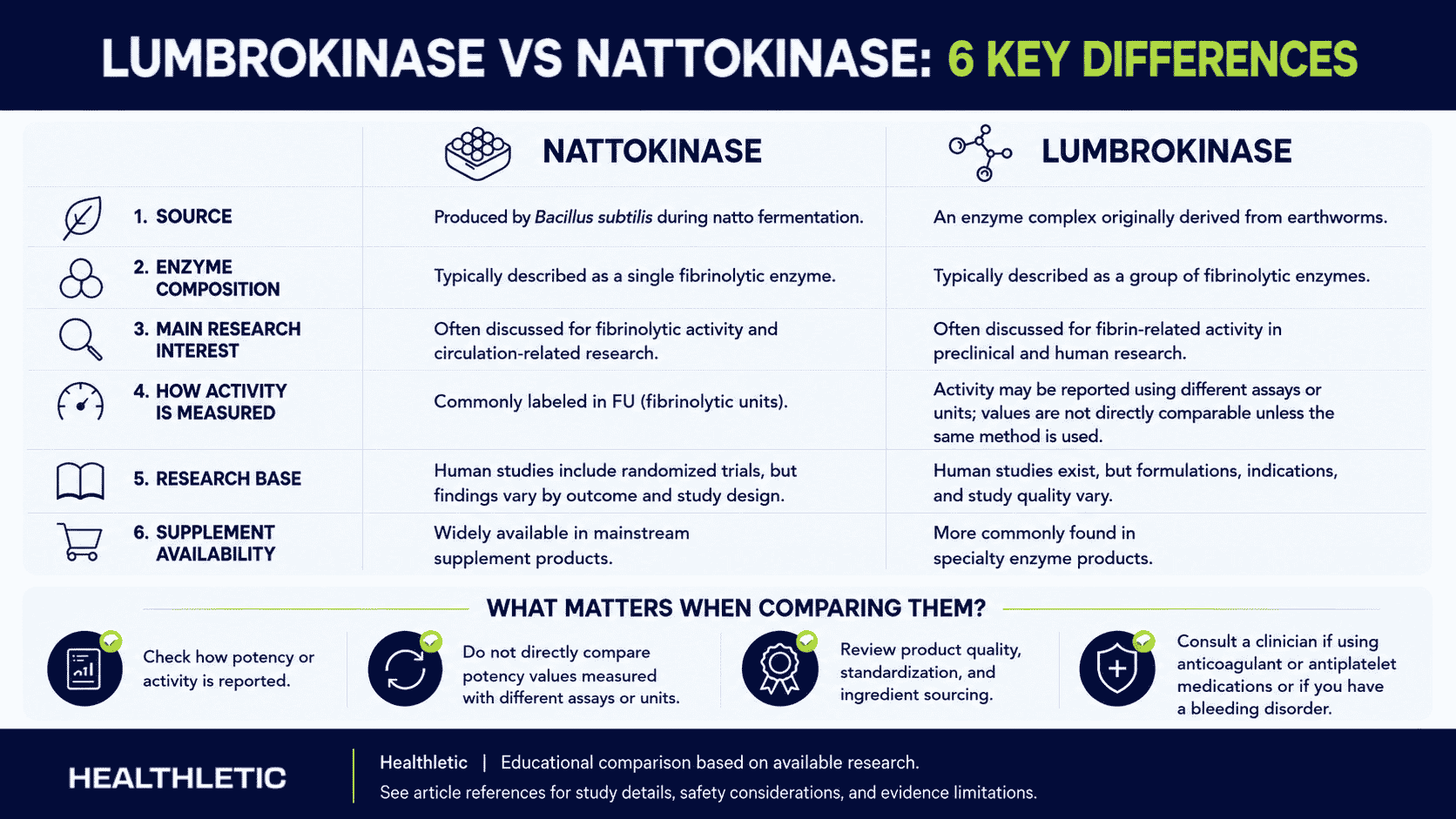
Lumbrokinase vs Nattokinase: Key Differences
Feature | Nattokinase | Lumbrokinase |
Source | Fermented soy (natto) | Earthworm-derived enzyme complex |
Fibrinolytic action | Breaks down fibrin and supports several fibrinolytic pathways | Directly degrades fibrin and may influence other fibrinolytic pathways |
Activity labeling | Commonly stated in FU (fibrinolytic units) | Activity units vary by formulation and manufacturer |
Human research | Blood pressure, fibrinolysis, coagulation markers, and other cardiovascular outcomes | Clinical research includes stroke-related and other specialized settings |
Typical supplement context | Daily cardiovascular and circulation support | Less common in general wellness supplements; often discussed in practitioner-guided contexts |
Direct strength comparison | No reliable human head-to-head potency comparison | No reliable human head-to-head potency comparison |
Both enzymes support fibrin management. Nattokinase has a broader supplement-oriented cardiovascular research base. Lumbrokinase has direct fibrin-degrading activity and appears more often in specialized clinical research.
How They Work in the Body
Nattokinase Mechanism
Nattokinase works through the body’s endogenous fibrinolytic system. It increases the activity of plasmin, the enzyme responsible for breaking down fibrin, while also reducing levels of plasminogen activator inhibitor-1 (PAI-1), which can limit fibrinolysis.
These mechanisms are also part of research on nattokinase cardiovascular health benefits, including circulation and blood-pressure outcomes.
This indirect mechanism allows nattokinase to:
- Promote steady fibrin breakdown
- Support healthy circulation without excessive disruption
- Improve endothelial function and nitric oxide production
Because it aligns with the body's natural processes, nattokinase is well tolerated and suitable for long-term use. Over time, consistent supplementation can contribute to improved vascular flexibility and more efficient blood flow.
Lumbrokinase Mechanism
Lumbrokinase operates through a more direct enzymatic pathway. It actively degrades fibrin and may also affect other fibrinolytic pathways. Mechanism alone cannot reliably rank its clinical potency against nattokinase because the products, activity units, and study settings differ.
Its mechanism includes:
- Direct enzymatic breakdown of fibrin strands
- Potential activation of additional fibrinolytic pathways
- Rapid reduction of fibrin accumulation
This direct activity helps explain why lumbrokinase appears in more specialized clinical research. The practical choice still depends on formulation, intended use, medications, and individual bleeding risk.
Benefits of Nattokinase vs Lumbrokinase
Benefits of Nattokinase
Human research on nattokinase includes a broad range of cardiovascular outcomes, including blood-pressure and fibrinolytic markers. This evidence is relevant to long-term vascular support.
Key benefits include:
- Support for healthy blood pressure levels
- Improved circulation and oxygen delivery
- Reduction in arterial stiffness
- Support for balanced cholesterol dynamics
- Long-term cardiovascular support
By supporting fibrin breakdown and circulation, nattokinase may contribute to healthier vascular function over time.
Benefits of Lumbrokinase
Lumbrokinase is valued for its direct fibrinolytic activity. Its research includes specialized cardiovascular and cerebrovascular settings where fibrin breakdown is clinically relevant.
These include:
- Direct fibrin degradation
- Research in medically supervised stroke settings
- Use in practitioner-guided protocols where fibrinolytic activity is being considered
A 2025 meta-analysis examined lumbrokinase as an add-on in acute ischemic stroke and reported improved neurological and functional outcomes compared with standard care alone, without a statistically significant increase in bleeding events.
Which Is Better: Nattokinase vs Lumbrokinase?
The choice between nattokinase and lumbrokinase depends largely on the intended goal. Each enzyme serves a distinct purpose, and selecting the right one requires understanding the context of use.
Nattokinase is generally the preferred option for individuals seeking:
- Daily cardiovascular support
- Improved circulation and blood pressure regulation
- Long-term arterial health maintenance
- A preventive approach to vascular aging
Lumbrokinase may be more relevant for readers specifically considering:
- An earthworm-derived enzyme complex with direct fibrin-degrading activity
- A product being used within a practitioner-guided plan
- An alternative fibrinolytic enzyme with research in specialized clinical settings
For most individuals, nattokinase provides a more practical and sustainable solution. Its safety profile, combined with extensive research and suitability for daily use, makes it the better choice for ongoing cardiovascular support.
Serrapeptase is another enzyme in the same supplement category. The comparison with how nattokinase compares with serrapeptase enzymes involves different source, activity, and research questions.
Can You Take Nattokinase and Lumbrokinase Together?
Combining nattokinase and lumbrokinase is technically possible, but it requires caution. Both enzymes influence fibrinolysis, and their combined effects may amplify the breakdown of fibrin beyond intended levels.
This combination may increase the risk of:
- Excessive bleeding
- Bruising
- Interactions with medications
The same nattokinase safety risks and medication interactions apply when considering a fibrinolytic enzyme combination.
Why Nattokinase Is the Preferred Daily Solution

Nattokinase stands out as the more practical choice for long-term cardiovascular health. Its balanced mechanism allows it to support multiple aspects of vascular function without overwhelming the body's natural systems.
Key advantages include:
- Extensive clinical research and historical use
- Compatibility with daily supplementation
- Broad cardiovascular benefits beyond fibrin breakdown
- Common FU activity labeling across products
FU stands for fibrinolytic units and describes enzyme activity. Understanding how nattokinase FU dosage is measured makes it easier to compare a supplement label with activity levels used in research.
Healthletic Ultimate Nattokinase provides a labeled 10,800 FU daily serving in a capsule format. A 12-month clinical study involving 1,062 participants also used 10,800 FU per day when examining cardiovascular markers. It was an observational study, so 10,800 FU should be treated as study-specific dose context.
When comparing products, what defines a quality nattokinase supplement includes clearly stated enzyme activity, ingredient identity, and testing information
Final Verdict
Lumbrokinase and nattokinase both have useful fibrinolytic roles. For most individuals, nattokinase is the more practical option for daily use. Its ability to support long-term cardiovascular health, combined with FU-based activity labeling and human cardiovascular research, makes it easier to compare products and place labeled potency in context.
Lumbrokinase remains a relevant fibrinolytic enzyme with direct fibrin-degrading activity and clinical research in more specialized settings. Potency is best assessed using the specific product label, intended use, medication profile, and medical context because formulations and activity measurements differ.
Healthletic Ultimate Nattokinase high-activity FU formula provides a clearly stated daily activity level in capsule form and links product quality to third-party testing. It is a practical option for readers who want a higher-activity nattokinase formula tied to a dose that has been used in human cardiovascular research.
Anyone taking anticoagulants or antiplatelet medications, preparing for surgery, or managing a bleeding disorder should discuss nattokinase or lumbrokinase with a qualified healthcare professional before use.
Frequently Asked Questions
What does nattokinase do exactly?
Nattokinase is a fibrinolytic enzyme that primarily works by breaking down fibrin, a protein involved in blood clot formation and the structural framework of arterial plaque. By supporting the body's natural clot-dissolving processes, it helps maintain smoother blood flow and reduces blood viscosity.
In addition to fibrin degradation, nattokinase may enhance circulation, support healthy blood pressure levels, and contribute to improved vascular flexibility.
Is lumbrokinase stronger than nattokinase?
A simple stronger-versus-weaker ranking is unreliable because lumbrokinase and nattokinase products use different formulations and activity measurements. Lumbrokinase has direct fibrinolytic activity, and nattokinase has human research across fibrinolysis and several cardiovascular markers.
Can nattokinase dissolve plaque?
Nattokinase has been studied for changes in carotid artery measures and blood lipids, including a 12-month observational study using 10,800 FU per day. These findings are relevant to vascular-health research. Direct plaque removal is a medical-treatment claim beyond what this observational study can support.
Is nattokinase safe daily?
Nattokinase is generally considered safe for daily use in most healthy individuals when taken at appropriate doses. It has a long history of use in traditional diets and is supported by modern research for its cardiovascular benefits.
However, because it influences blood clotting pathways, individuals who take anticoagulant medications, have bleeding disorders, or are preparing for surgery should consult a healthcare provider before using it.
When used responsibly and with proper guidance if needed, nattokinase can be a well-tolerated and effective addition to a long-term cardiovascular support routine.
References
- Li, X., Long, J., Gao, Q., Pan, M., Wang, J., Yang, F., & Zhang, Y. (2023). Nattokinase supplementation and cardiovascular risk factors: a systematic review and meta-analysis of randomized controlled trials. Reviews in Cardiovascular Medicine, 24(8), 234. Link.
- Kim, J. Y., Gum, S. N., Paik, J. K., Lim, H. H., Kim, K. C., Ogasawara, K., Inoue, K., Park, S., Jang, Y., & Lee, J. H. (2008). Effects of nattokinase on blood pressure: a randomized, controlled trial. Hypertension Research, 31(8), 1583-1588. Link.
- Kurosawa, Y., Nirengi, S., Homma, T., Esaki, K., Ohta, M., Clark, J. F., & Hamaoka, T. (2015). A single-dose of oral nattokinase potentiates thrombolysis and anti-coagulation profiles. Scientific Reports, 5, 11601. Link.
- Urano, T., Ihara, H., Umemura, K., Suzuki, Y., Oike, M., Akita, S., Tsukamoto, Y., Suzuki, I., & Takada, A. (2001). The profibrinolytic enzyme subtilisin NAT purified from Bacillus subtilis cleaves and inactivates plasminogen activator inhibitor type 1. Journal of Biological Chemistry, 276(27), 24690-24696. Link.
- Yoo, H. J., Kim, M., Kim, M., Lee, A., Jin, C., Lee, S. P., Kim, T. S., Inoue, K., Lee, S. H., & Lee, J. H. (2019). The effects of nattokinase supplementation on collagen-epinephrine closure time, prothrombin time and activated partial thromboplastin time in nondiabetic and hypercholesterolemic subjects. Food & Function, 10(5), 2888-2893. Link.
- Chen, H., Chen, J., Zhang, F., Li, Y., Wang, R., Zheng, Q., Zhang, X., Zeng, J., Xu, F., & Lin, Y. (2022). Effective management of atherosclerosis progress and hyperlipidemia with nattokinase: a clinical study with 1,062 participants. Frontiers in Cardiovascular Medicine, 9, 964977. Link.
- Wiyarta, E., Hidayat, R., Kurniawan, M., Saputro, B. I. L., Maharani, I. L., Rampengan, D. D. C H., Tanudharma, L. C., & Tjandrawinata, R. R. (2025). Therapeutic potential of lumbrokinase in acute ischemic stroke: a meta-analysis of efficacy and safety. Therapeutics and Clinical Risk Management, 21, 1319-1331. Link.

Maria Morgan-Bathke, PhD, RD
PhD in Nutritional Sciences | MBA (Health Care Management) | Registered Dietitian
Maria holds a B.S. in Dietetics from UW–Stout, a Ph.D. in Nutritional Sciences from the University of Arizona, and an MBA in health care management from Viterbo University. She completed a Medical Nutrition Therapy–focused dietetic internship at Carondelet Health System and a postdoctoral fellowship at the Mayo Clinic in the Endocrine Research Unit with Dr. Michael Jensen.
She is an Associate Professor, Department Chair, and Dietetic Internship Director at Viterbo University, an Adjunct Professor at Saybrook University, and a Registered Dietitian for Nourish. She is also the founder of Dr. Maria’s Nutrition and Wellness. Her research interests include obesity and weight management, inflammation, insulin signaling, cardiometabolic health, and women’s health.